
Everyday life
A day with room for your own choices.
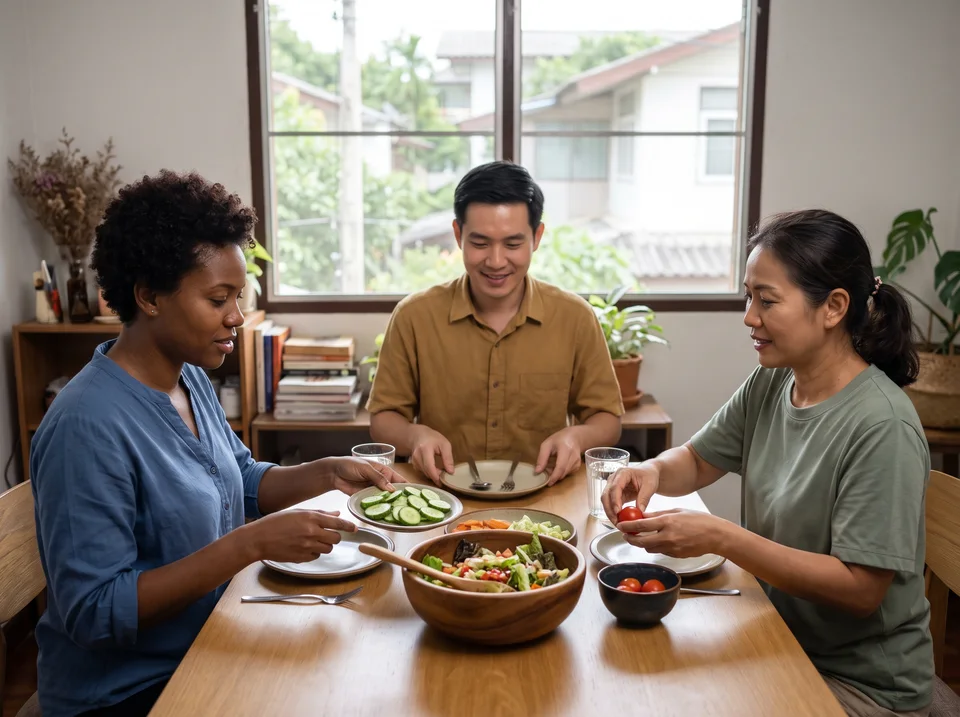
A shared meal, a favourite book, a game left ready on the table. The intention is a familiar household rhythm with flexibility for each person.
Doing things together
Participation can take many forms.
Some people enjoy preparing a meal. Others prefer setting the table, choosing what to eat or joining when it is ready. Taking part should allow for different interests and different amounts of assistance.
The planned household approach makes space for ordinary shared activities without turning the day into a programme everyone must follow.
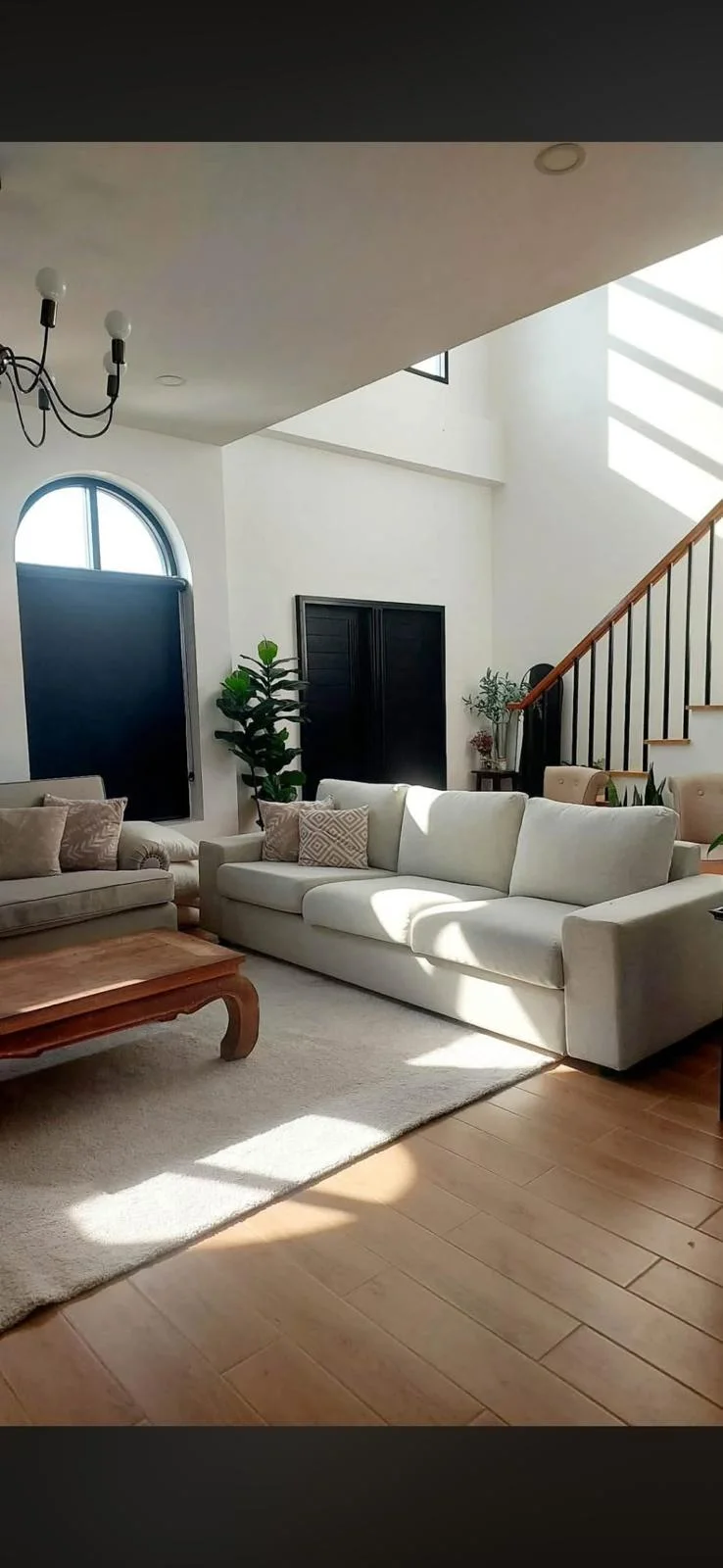
These are possibilities for future life at Mosaic Living. Activities, practical support and the use of each space need to be agreed around the people who may live here.
Around the table.
Meals can offer a familiar point in the day and a chance to spend time together. Planning should take account of food preferences, routines and any dietary or eating-related support needs.
The same table might make room for a board game, a simple craft or a project someone wants to return to. Joining for a short time, watching or choosing something else should all be part of the conversation.
Specialist dietary provision or assistance with eating must be discussed and confirmed individually.
Something of your own.
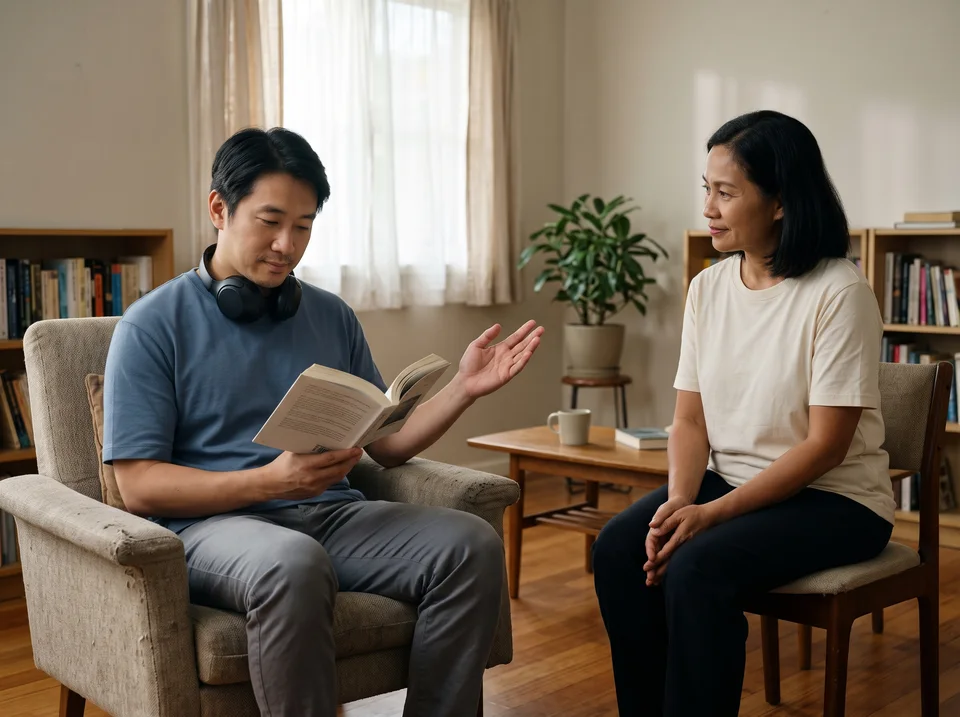
A book, favourite music or a familiar creative activity can help a new place feel more personal. Having somewhere appropriate to keep those things is part of planning a usable home.
Interests do not have to be shared by everyone. One person may want a game with company while another prefers reading nearby or time away from the group.
The aim is to learn what matters to each adult rather than assume which activities someone will enjoy.
A quieter moment
Taking a break is a choice too.
A comfortable rhythm includes the option to pause. Quiet reading or music at a suitable volume may be welcome after time with others.
Noise, lighting, personal space and ways to signal a need for quiet should be discussed during individual planning. The illustration expresses that intention; it does not show an adapted room at the property.
Outside, at your pace
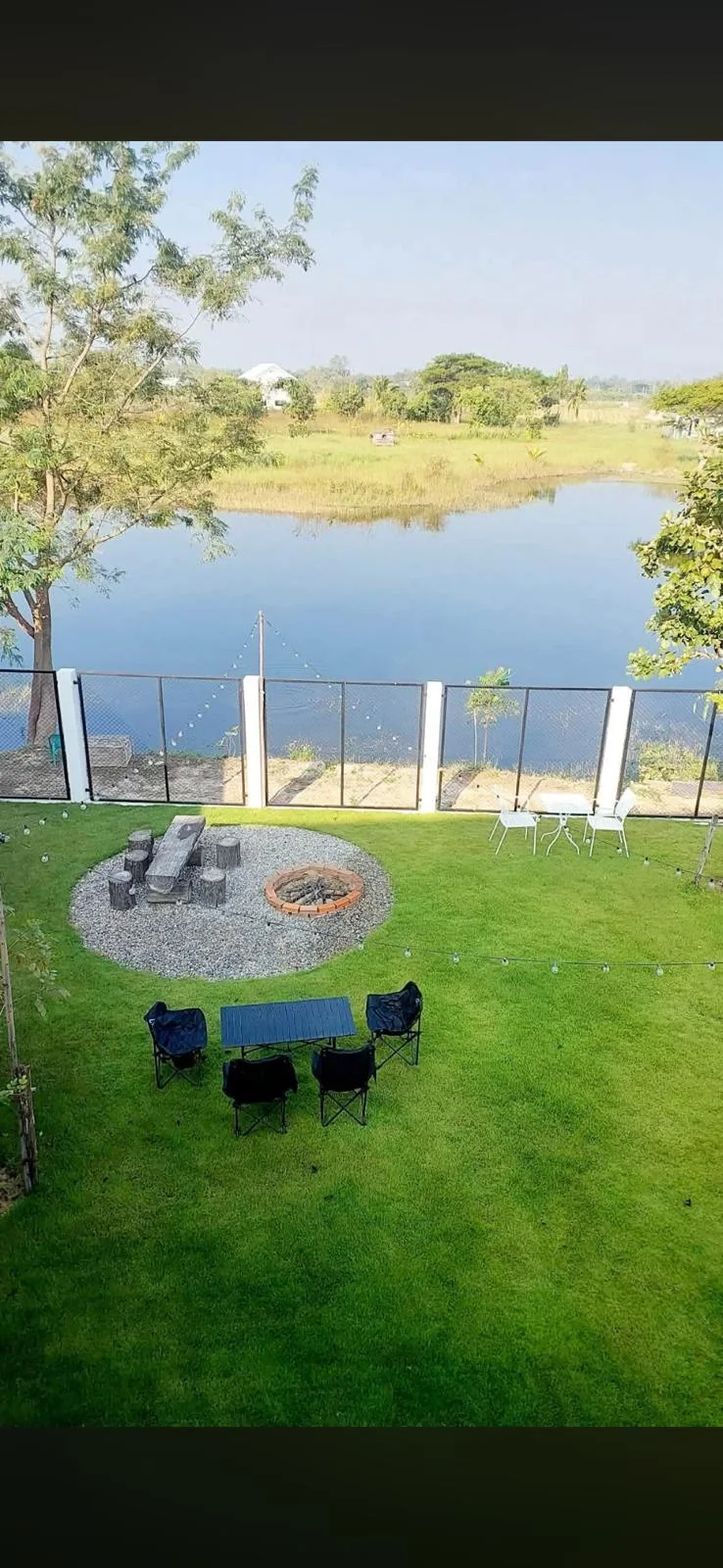
Tea, plants and a change of scene.
This owner-supplied photograph shows the actual garden, including water and a fence. Sitting outside, sharing a drink or a small plant activity are possibilities to explore where conditions and individual needs allow. The photograph does not confirm safe or independent access.
There is no fixed timetable in this preview. Familiar routines can be useful, and plans should also leave room for a person's energy, preferences and wish to do something different.
See the actual gardenTaking the next step
What makes a good day for you?
The things you enjoy, the routines you value and the support that helps are useful starting points for a conversation.
Talk first or start with a short questionnaire. Either is a welcome beginning.